
REPIPING A HOUSE – EVERYTHING YOU SHOULD KNOW
Old Pipes in Portland Homes: When Is It Time to Repipe?
Many homes in Portland were built decades ago, and while the house may still be in great condition, the plumbing hidden behind the walls, under the floors, or inside the crawlspace may be reaching the end of its useful life.
Old plumbing does not always fail all at once. In many cases, homeowners first notice small problems: lower water pressure, rusty-looking water, a leak under the house, or another plumbing repair only a few months after the last one.
One repair does not necessarily mean your entire house needs to be repiped. But when the same problems continue happening throughout an older plumbing system, it may be time to look at the condition of the pipes as a whole.
What Types of Old Pipes Are Common in Portland Homes?
Older Portland homes can contain several generations of plumbing materials depending on when the house was built and whether previous owners made repairs or additions.
One material we pay particular attention to is galvanized steel piping.
Galvanized pipes were commonly installed in older homes. Over time, corrosion can develop inside the pipe. Because much of this deterioration happens internally, a pipe may look acceptable from the outside while the opening inside has become significantly restricted.
Older homes can also have plumbing systems made from a combination of different materials. Sections may have been repaired or replaced at different times, leaving the house with a mixture of old and newer piping.
That is why the age of the house alone does not tell the entire story. The existing plumbing system needs to be evaluated.
Signs of Old Pipes in Portland Homes
There are several warning signs homeowners should not ignore.
Low Water Pressure
Low pressure at one fixture may be caused by a localized problem. But weak water flow throughout several fixtures can indicate a larger issue.
In older galvanized plumbing, corrosion and mineral buildup inside the pipes can gradually reduce the amount of water that can pass through them.
Rusty or Discolored Water
If you notice brown, yellow, or rusty-looking water, especially when first turning on a faucet, the plumbing system should be evaluated.
Discoloration can have different causes, but deteriorating older pipes are one possibility.
Repeated Leaks
One isolated leak can usually be repaired.
However, when leaks begin appearing in different areas of an older plumbing system, repeatedly repairing individual sections may no longer address the underlying problem.
At that point, it is worth evaluating whether the remaining pipes are approaching the same condition.
Visible Corrosion
Exposed plumbing in a basement, garage, utility area, or crawlspace can sometimes provide clues about the condition of the system.
Rust, corrosion, staining around fittings, previous repair clamps, or multiple patched sections can indicate that the plumbing deserves a closer inspection.
Different Pipe Materials Throughout the House
Older homes are often repaired a little at a time.
One section may be galvanized steel, another copper, and another a newer material installed during a remodel.
Mixed materials do not automatically mean the plumbing is defective, but numerous repairs and transitions can tell us that the system has been modified many times over its life.
Repair or Repipe: How Do You Know?
Not every plumbing problem requires a whole-home repipe.
If the majority of the plumbing is in good condition and there is one isolated problem, repairing that section may make the most sense.
The situation becomes different when the plumbing is old, and problems are occurring throughout the system.
A homeowner may repair one leak today, another section several months later, and then begin experiencing pressure problems somewhere else.
At some point, continuing to repair individual sections of a deteriorating system can become less practical than replacing the old water lines.
The decision should be based on the condition of the plumbing, not simply the age of the house.
What Is Involved in Repiping a House?
A whole-home repipe replaces the old water-distribution piping supplying fixtures throughout the house.
Before beginning, the existing plumbing should be evaluated to determine how the current lines are routed and how new piping can be installed efficiently.
Depending on the home’s construction, new water lines may be routed through areas such as:
- Crawlspaces
- Basements
- Walls
- Ceilings
- Attics
- Utility areas
Every house is different.
In some homes, much of the plumbing can be reached from a crawlspace or basement, which can reduce the amount of wall access required. Other houses may require openings to reach certain fixtures.
A professional evaluation helps determine the best approach before work begins.
PEX Piping for Modern Repiping
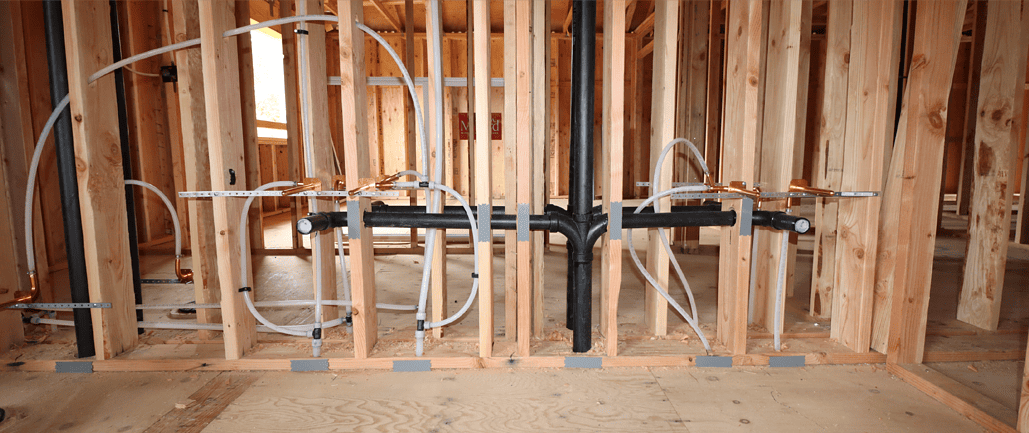
PEX is commonly used for residential water distribution and can be a practical option when replacing aging water lines.
Its flexibility can make routing new plumbing through existing homes easier than working with rigid piping in certain situations.
The appropriate pipe material and installation method should always be selected based on the home’s construction, local plumbing requirements, and the specific project.
Should You Repipe During a Remodel?
A remodel can be an excellent time to evaluate old plumbing.
When walls or ceilings are already open for a kitchen, bathroom, basement, or whole-home renovation, access to plumbing may be much easier.
If an older plumbing system is already nearing the end of its useful life, addressing it while the house is under construction can prevent having to reopen finished areas later.
This does not mean every remodel requires a repipe. It means homeowners should consider the condition of existing plumbing before covering everything back up.
Don’t Wait for a Major Leak to Evaluate Old Plumbing
Old pipes do not necessarily need to be replaced simply because they are old.
But repeated leaks, poor water flow, corrosion, discolored water, and numerous previous repairs are signs worth investigating.
The goal of an evaluation is to understand what is happening with the existing plumbing and determine whether a repair, partial replacement, or whole-home repipe makes the most sense.
For homeowners in Portland and the surrounding area who are concerned about galvanized or aging water lines, JAM Plumbing PDX can evaluate the existing plumbing system and discuss the available options.
To learn more about replacing old water lines, visit our Whole-Home Repiping Specialists in Portland service page or contact JAM Plumbing PDX to schedule an evaluation.
This article provides general information about residential plumbing. The condition of every plumbing system is different, and an on-site evaluation may be necessary before determining whether repair or replacement is appropriate.
Leave a Reply
Want to join the discussion?Feel free to contribute!